Bringing a Drug to Market Versus Approving a Drug for a Program: A Proposal
Bringing a drug to market is not the same as getting a drug approved for inclusion in a public program.
View/Download [PDF]
Rhoads, J. "Bringing a Drug to Market Versus Approving a Drug for a Program: A Proposal" Center for Modern Health. May 2026.
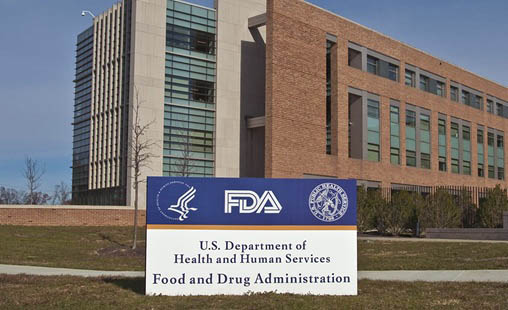
Last summer, we all witnessed the kerfuffle between then-FDA adviser Vinay Prasad and gene therapy company Sarepta Pharmaceuticals.1
Sarepta is the maker of Elevidys, which treats Duchenne muscular dystrophy (DMD). Based on the trial data, the clinical benefits for Elevidys appeared modest, and the safety profile was shaky. The question before FDA regulators was whether to approve the drug.
Elevidys had received FDA approval in June 2023 by Prasad’s predecessor Peter Marks through the Accelerated Approval Program. But in July 2025, after taking over the FDA's Center for Biologics Evaluation and Research (CBER), Prasad led a decision to request a suspension of Elevidys shipments, citing safety concerns and patient deaths.2 This triggered an immediate firestorm, with Sarepta, conservative "influencers," rare disease advocates, and political allies mounting an intense public pressure campaign against Prasad that reportedly contributed to his temporary departure from the agency before he later agreed to return.
Highly public and politically contentious debates about drug approvals are increasingly common as pharmaceutical companies submit their data and regulators make their determinations. These decisions can be hard to make. Trial methodologies are rarely ideal. Data and results can send mixed signals. In the case of Elevidys, there were plenty of questions surrounding safety and efficacy. For instance, on the safety side there were associations with acute serious liver injury and fatalities in non-ambulatory patients. On the efficacy side, it looked like the drug made patients only a fraction of a second faster at standing up from the floor and walking/running 10 meters compared to those on a placebo.
There was also an additional factor that was hard not to notice: the enormous price tag of the drug. By law, the FDA is only supposed to look at safety and efficacy when determining whether to approve a drug. It is not allowed to consider cost. But Elevidys, a viral vector-based gene transfer therapy intended to address the underlying genetic cause of the disease, carried a price tag of $3.2 million per infusion treatment, and a substantial portion of the revenue from this drug was expected to come from Medicaid.
Developing a new drug requires years of research and clinical testing. It is a well-publicized fact that this can cost well over $1 billion to bring a new drug to market. For a company like Sarepta, FDA approval is not merely a scientific milestone; it is the moment when years of sunk investment finally have a chance to begin generating revenue. A favorable FDA decision can unlock billions of dollars in future sales, while a rejection or suspension can wipe out enormous amounts of shareholder value almost overnight.
When so much scientific, financial, and medical power is concentrated into a single regulatory decision, it is reasonable to ask whether the system is structured correctly.
How Do You Change?
One radical alternative that has been proposed is to abolish the FDA. Figures such as Sam Peltzman, Milton Friedman, and Richard Epstein have argued that efficacy requirements reduce innovation and delay access to life-saving drugs.3,4,5 Friedman was perhaps the first prominent figure to explicitly call for the abolition of the FDA. He favored replacing much of the FDA’s role with private certification, tort liability, and voluntary information mechanisms. Implicit in this line of thinking is the idea that no government agency should stand between a drugmaker and the patient. One might say that this view holds that there is a "right to bring a drug to market."
Whatever its merits economically or philosophically, the idea of abolishing the FDA has not made a lot of political progress over the past four decades. It is rarely discussed in mainstream policy circles, almost never appears in legislative agendas, and sits well outside the Overton window. There may be commentators in free-market circles who occasionally speak or write about this idea, but there are approximately zero major policy entrepreneurs seriously attempting to advance this as a near-term political project.
Here’s a new, more realistic proposal: Limit the FDA's approval power just to drugs and therapies seeking inclusion in government-run insurance programs. Under this new regulatory approach, if a company wants to sell a new drug or therapy directly to private consumers or to private insurers, all it would need to do is demonstrate basic safety.6 It would not need to demonstrate efficacy to a government reviewer. Patients would be able to access drugs and therapies using their own money, or through insurance policies that choose to cover the drug, without waiting for a government agency to greenlight their decisions. The right to bring a drug to market finally would be recognized. However, if a company wants its new drug or therapy covered by a government program such as Medicare or Medicaid, it must meet safety and efficacy approval, and cost will be taken into consideration.
In other words, the bar would be lowered for entry to the private market, and raised for inclusion in public programs.
A way of conceptualizing and justifying this approach is: the right to bring a drug to market means bringing it to a market, but pitching a product for coverage by a government program is not a market. Public programs involve public funds; they are redistributive in nature, and they have different ethical obligations. When a pharmaceutical company seeks Medicare and Medicaid inclusion for its drug, it is seeking payment from the public purse in a non-competitive market. Out of responsibility to taxpayers, it is not unreasonable to treat those two things differently.
This new proposal would empower the FDA to protect taxpayer dollars against the introduction of drugs that are high-cost and minimally helpful, while restoring to private individuals a fundamental freedom that the agency currently denies: the right to buy medical care from willing sellers. The message to drugmakers would be: "Once you’ve hit basic safety standards, if you can persuade private payers or patients to use your drug, you're free to do so. There's no centralized approval gatekeeping your path to market. But if you want government programs to buy your drug with public funds and give you instant access to a massive patient population, then yes, you must meet the FDA's evidentiary standards (and price will now openly play a part in that decision)." Battles and negotiations about coverage might ensue in the private sector between pharmaceutical companies and insurers, but that is where those decisions should be hashed out, i.e., between private parties, where each can walk away.
Summary
The current FDA approval regime fuses together two fundamentally different questions: 1) whether people should be free to buy a new drug or therapy from a willing seller, and 2) whether taxpayers should be required to pay for that drug through government insurance programs. Those are not the same question, and they do not require the same standard. For a free society, it should be possible to be more permissive in letting drug companies bring their therapies to private insurers and patients, and more demanding of drug companies in approving therapies for payment using public funds. The proposal above, of course, is merely an initial sketch of a new direction.7 There are many details and side effects to consider. But the broader principle behind it extends well beyond drug approvals alone.
This proposal reflects a deeper reform principle for American healthcare: the need to more clearly separate the public sphere from the private sphere. Too often, rules and restrictions that may have some justification in the context of government spending inappropriately spill over and become constraints on voluntary exchanges between patients, physicians, insurers, and innovators. Instead of applying one regulatory approach to both domains, we should look for ways to separate these two domains.
Not only might we get better outcomes through a more rights-respecting process, but we might also manage to reduce the pressure campaigns directed at individual regulators, allowing good people to not be driven out of public service.
References:
1. Liu, Angus. "Vinay Prasad Departs FDA Amid Conservative Criticism, Controversy over Sarepta Gene Therapy." Fierce Pharma, 30 July 2025.
2. U.S. Food and Drug Administration. (2025, July 18). FDA requests Sarepta Therapeutics suspend distribution of Elevidys and places clinical trials on hold for multiple gene therapy products following 3 deaths.
3. Peltzman, S. (1973). An evaluation of consumer protection legislation: The 1962 Drug Amendments. Journal of Political Economy, 81(5), 1049-1091.
4. Milton Friedman, interviewed by Peter Robinson. Take It to the Limits: Milton Friedman on Libertarianism. Hoover Institution. Recorded February 10, 1999.
5. Epstein, Richard A. Overdose: How Excessive Government Regulation Stifles Pharmaceutical Innovation. New Haven, CT: Yale University Press, 2006.
6. If you object that even a basic safety review by the FDA is itself an unjustified government intrusion into voluntary exchange, fine. I concede that that position is more internally consistent than the proposal outlined here. Nevertheless, retaining a safety standard likely makes this reform more politically and institutionally achievable. And, once efficacy review is decoupled from private purchasing decisions, future debates about the safety review could proceed from a better, more market-oriented baseline. Reformers must think strategically.
7. I have never heard anyone propose this exact reform idea, but the policy literature is vast and it is of course possible that someone somewhere has laid out this idea already. If so, bring it to my attention and I will make an addendum.